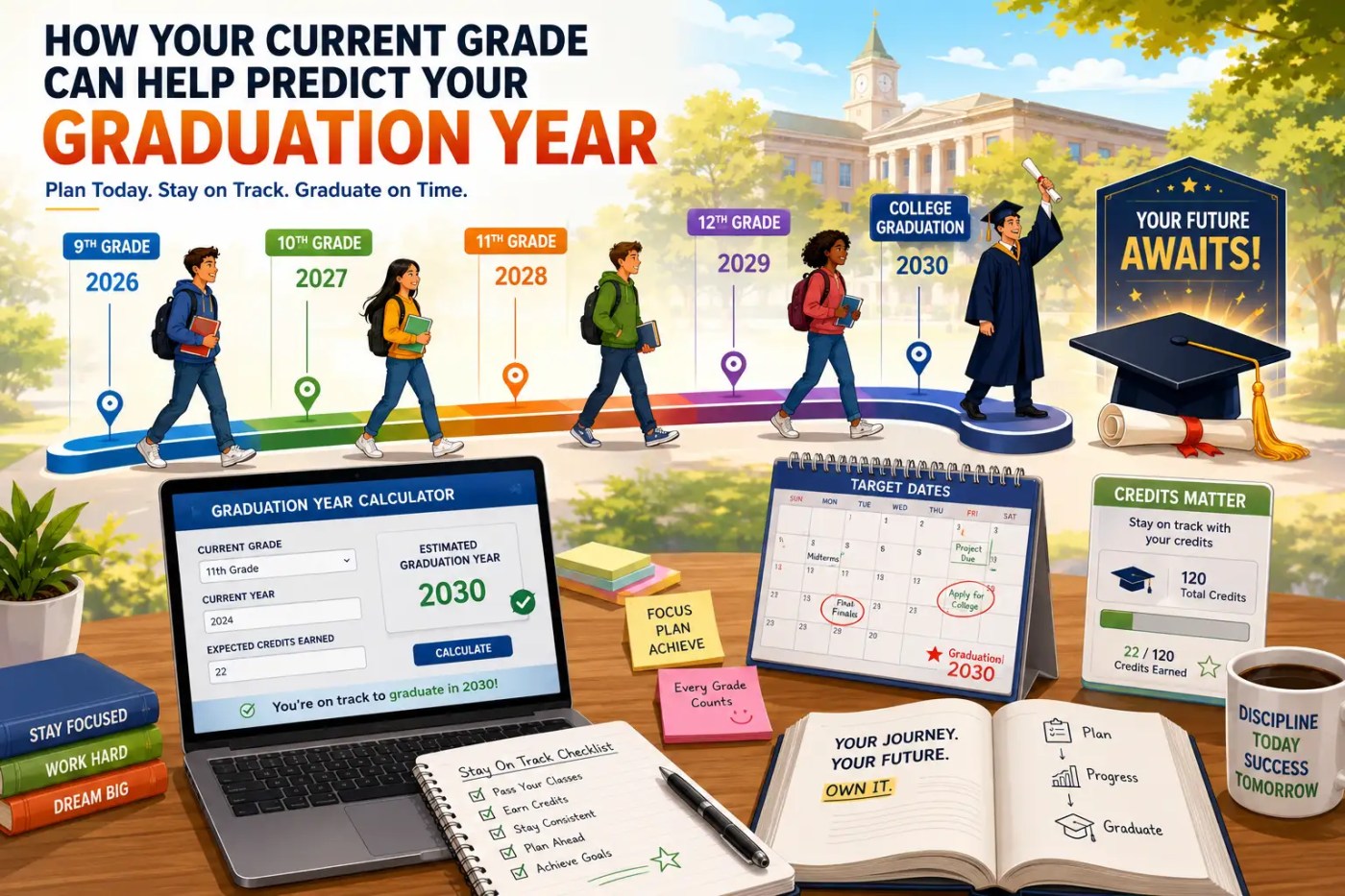
Knowing your target completion date helps you stay on track, whether you are filling out financial aid forms, applying for summer internships, or ordering your senior class ring. Your current grade level acts as the starting point for forecasting when you will walk across the stage.
Predicting your finish line might seem as simple as adding four years to high school or college. Yet, real life brings changes like credit transfers, summer classes, or light credit loads. Here is how to use your current academic standing to calculate your exact graduation year accurately.
Why Your Graduation Year Matters
Your expected graduation date is more than a milestone. It drives important academic, financial, and career decisions.
- Financial Aid Schedules: Student loans, grants, and scholarships require an accurate completion date to disburse funds correctly.
- Internship Eligibility: Most corporate internship programs target students in their junior year or those within twelve months of finishing their degree.
- Resume Building: Employers look at your expected date to know when you will be available for full-time work.
- Academic Planning: Knowing your target year helps you space out required prerequisites without burning out.
How to Predict Your Graduation Year by Current Grade
If you follow a standard full-time path without breaks, predicting your end date requires basic math. Use this reference chart to find your expected graduation year based on your grade level for the 2026–2027 school year.
| Current Grade / Academic Standing | Typical Program Length | Expected Graduation Year |
| 9th Grade (High School Freshman) | 4 Years | 2030 |
| 10th Grade (High School Sophomore) | 3 Years Remaining | 2029 |
| 11th Grade (High School Junior) | 2 Years Remaining | 2028 |
| 12th Grade (High School Senior) | 1 Year Remaining | 2027 |
| College Freshman | 4 Years | 2030 |
| College Sophomore | 3 Years Remaining | 2029 |
| College Junior | 2 Years Remaining | 2028 |
| College Senior | 1 Year Remaining | 2027 |
Note: High school schedules are fixed by grade level, but college timelines depend entirely on credit hours earned rather than years spent on campus.
Calculating Your Graduation Year with College Credits
In college, your official grade status depends on completed credit hours, not how long you have been enrolled.
The Credit Hour Formula
To find out how many years you have left, take your degree’s total credit requirement, subtract your completed credits, and divide that by your average annual credit load.
(Total Required Credits - Completed Credits) / Credits Completed Per Year = Years Remaining
Real-World Scenario: The Accelerated Student
Imagine you need 120 credits for a bachelor’s degree. You enter college as a freshman with 15 Advanced Placement (AP) credits from high school.
- Required Credits: 120
- Starting Credits: 15
- Remaining Credits: 105
- Pacing: You take 15 credits per semester (30 credits per year) plus 6 credits every summer (36 credits total per year).
Dividing 105 by 36 gives you 2.9 years. By taking summer courses, you move your graduation date up from four years down to three years, finishing a full year ahead of your starting cohort.
Tools to Calculate Your Finish Date Fast
You do not need to do manual calculations every time you register for classes. Digital tools keep your academic roadmap updated automatically:
- Degree Audit Systems: Most university portals offer a degree evaluation tool that matches your completed classes against major requirements and displays your expected finish date.
- Online Tools: Using an interactive Graduation Year Calculator lets you input your starting term, current credit count, and term pace to get an instant target date.
- Academic Advising Worksheets: Department planning sheets allow you to map every required course term by term until you hit the required credit total.
Variables That Shift Your Expected Date
Few student journeys run in a straight line. Keep an eye on these common factors that can speed up or slow down your path to graduation:
1. Changing Your Major
Switching majors late in your academic career often means some courses become general electives instead of major prerequisites. This shift can force you to take extra terms to complete new major requirements.
2. Taking Summer and Winter Sessions
Catching up on general education requirements during short summer or winter terms lets you reduce your term load during the regular academic year or graduate a semester early.
3. Dropping to Part-Time Status
Full-time students take at least 12 credits a semester, while part-time students take fewer. Taking 6 credits a semester doubles the time required to complete your degree.
4. Credit Transfer Loss
When transferring between schools, not all credits carry over toward your specific degree track. Always request an official credit evaluation early so you know where you stand.
What to Do If Your Timeline Changes
If you discover your completion date has shifted, take action right away to keep your plans aligned:
- Meet with Your Advisor: Build a revised course map to see if taking summer courses can get you back on track.
- Update Your Financial Aid Office: Inform counselors if you need an extra term so they can adjust your aid packages and loan limits.
- Adjust Your Resume: Update the expected graduation month and year under your education section so employers have accurate dates for your availability.
Predicting your finish date gives you full control over your academic journey. Check your transcript every semester, keep your credit count updated, and adjust your roadmap whenever your plans change.


Leave a Reply